
School System Rant

Reflection 2: Sparked by the videos from week 3 featuring Jeff Hopkins

Generally, School systems are supposed to be designed to educate the youth and prepare them for adult life, yet many feel they fail to do this. Many school systems struggle because they rely on outdated structures, push standardized testing and grading over valuable learning, and do not always consider the diverse needs of students. The education system should empower individualism and strengthen society while laying the foundation for the rest of life and its challenges.  

One of the main reasons the current school systems fail is that its structure was designed during the industrial era and has not significantly progressed since. Schools generally operate using stiff schedules, a standardized curriculum, and expectations for students. This system assumes that all students learn the same way and at the same pace, which is rarely the case. Students have different interests, learning styles, and abilities, so when forced to conform to a system that does not support their learning, students inevitably fall behind or are discouraged.  

Another issue is the heavy use of standardized testing and grading. In western education systems, success is usually based on exam results and numerical grades. While some assessments can gauge progress, heavy reliance can lead to a shift in focus away from genuine, valuable learning. Students may only learn to memorize information for a short period of time just to pass a test rather than retainand really understand the content. This can lead to students passing with strong test-taking skills but not having a broader understanding of the subjects’ concepts and researching abilities that school is supposed to provide.  

Also, the curriculum and content of many schools do not feel relevant to students’ lives and future goals. Subjects are generally taught in isolation from outside, real-world applications. When students cannot see how what they are learning connects to their personal lives, interests, or career aspirations, they can lose confidence and feel disconnected from the environment. Education is most effective when students can understand and visualize how what they are learning connects to them beyond the classroom.  

Understanding the current weaknesses is an important step towards improving them. Education works best when curiosity is encouraged, unique learners are supported, and students’ personal lives are focused on, rather than exam scores or numerical grades. One of the reasons I enjoy this class is that it allows you to pursue your own interests and encourages you to be curious within a supportive network. It’s what more school systems should be structured like; to support students on a journey of their own inquiry, and to help them when needed, rather than conform them to an outdated system that does not prepare them for their future.  

Before Editing

INQUIRY POST 1: VIDEO EDITING

Mindwork

As someone who has done very little video editing years ago, trying to dive deeper into can be a bit overwhelming. But it’s been something I’ve wanted to pursue for a while now, and this course is the perfect opportunity to finally force myself to stop being lazy. Luckily, learning how to edit videos from scratch isn’t too difficult; it just requires a bit of patience and a lot of time.  

Groundwork 

The first step was to find video editing software that fit my needs. I used YouTube to find and learn a little bit about some of the free video editing programs that are available, then chose the one that was beginner friendly and had the necessary tools for my first project.  

The first video I watched was by â€˜Think Media’ and is an introduction guide to video editing. The software he uses in the video is Camtasia, which is different from what I’ll be using. Although the video offers other tips and insights, for example, he demonstrates how to organize video files in preparation for editing, to allow for ease of access and convenience.  

The second video by ‘Youri van Hofwegan’ is super helpful for beginners who would like to use free editing software. He goes over a list of different programs, highlighting the pros and cons of each, and gives a very surface level, but informative coverage of them. This video really gave me a decent understanding of which editor would work for my specific needs and informed me on which to research further. 

Fieldwork 

Unless you’re using videos from the internet, you have to do a little bit of work. Depending on the content you want to create, filming footage can be simple or complicated. I’m personally making edits about longboarding, which is a bit physically demanding, and makes capturing specific footage difficult. Luckily, I have a partner who already had photography and videography experience, which made the process much easier, so I recommend finding someone to film with if your content is similar. 

Generally, when capturing, you want to have fairly long clips that you can cut up during the editing process, anywhere from 20 to 60 seconds. It does definitely vary depending on your content and style of editing you want to achieve, but for mine, we focused on longer sequences that we could cut sections that we liked to use for the final product. For videoing you can use an actual camera or your phone, it just depends on the quality of image you want.

Once you have the desired footage, you can move to editing.  
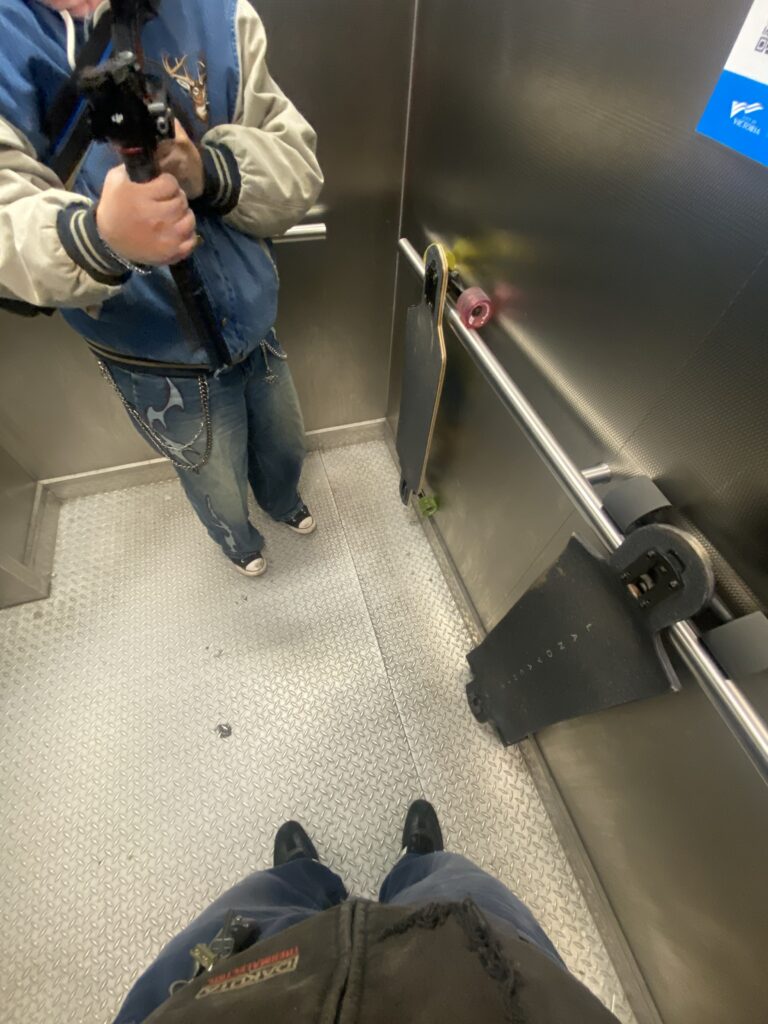
some bts photos

Another video that’s very helpful if you’re learning on your own is a video below by ‘Andrew’ that goes over how to film videos as well as some editing tips for DaVinci Resovle.

The Only Thing Stronger Than Hate Is Love  

Reflection 1: On the video essay “The Only War You Will Not Win” by Horses.

The Iceberg 

The human subconscious is a peculiar concept. It manages the majority of our mental activity––habits, memories, emotions, and automatic functions like walking and breathing. Operating beneath our conscious mind, itinfluences our decision-making and behaviors, shaping our reactions to the world based on stored past experiences. Psychologist Sigmund Freud famously described it as an iceberg, where the top portion is our conscious mind and the bottom is the subconscious. He suggests that unresolved conflicts between the two could lead to unhealthy mental states, like anxiety and depression. Psychiatrist Carl Jung expands upon this by suggesting that the subconscious harbors aspects that people disdain about themselves, something that is referred to as a â€œshadow”. 

The Shadow 

The concept of the “shadow” comes from Carl Jung, a Swiss psychiatrist and physiotherapist known for founding analytical psychology, where he explores the integration of the conscious and subconscious mind in pursuit of “individuation” ––the development of self. He believes that everyone carries facets of themselves that they don’t want to accept––things like fear, selfishness, and anger. He thinks that rather than repressing these traits in hopes that they will go away, we should learn to recognize, understand and integrate these shadowed parts into our conscious lives.  

The Battle 

The real challenge begins with choosing to reflect upon these repressions. What makes this idea so powerful is how we think about personal growth. Many of us want to be good people––kind, thoughtful, empathetic––and we think that means ridding ourselves of the negative parts. True wholeness doesn’t come from rejecting our flaws––but understanding them and choosing how you act despite having them. Everyone has moments of embarrassment, thoughts and impulses they’d rather avoid. The â€œbattle” isn’t about erasing these parts––rather, it’s about acknowledging them without letting them define you. 

The Choice  

This kind of reflection extends outwards as well––as everyone everywhere has to live with the consciousness of their flaws, their own “shadows”. A kindness we can grant is to be compassionate towards others’ flaws. Instead of seeing mistakes as proof that a person is bad, we could see them as part of being human––imperfect, often messy, but capable of growth. It doesn’t excuse harmful behavior, but it allows space for empathy and understanding. We all have the choice, not to cleanse our faults, but to be better, kinder, open––to other people, the world, and ourselves. Love a little more.  

Photo by me, artist unknown

Test Blog

“It is a shame for a man to grow old without seeing the beauty and strength of which his body is capable”.

-Aristotle